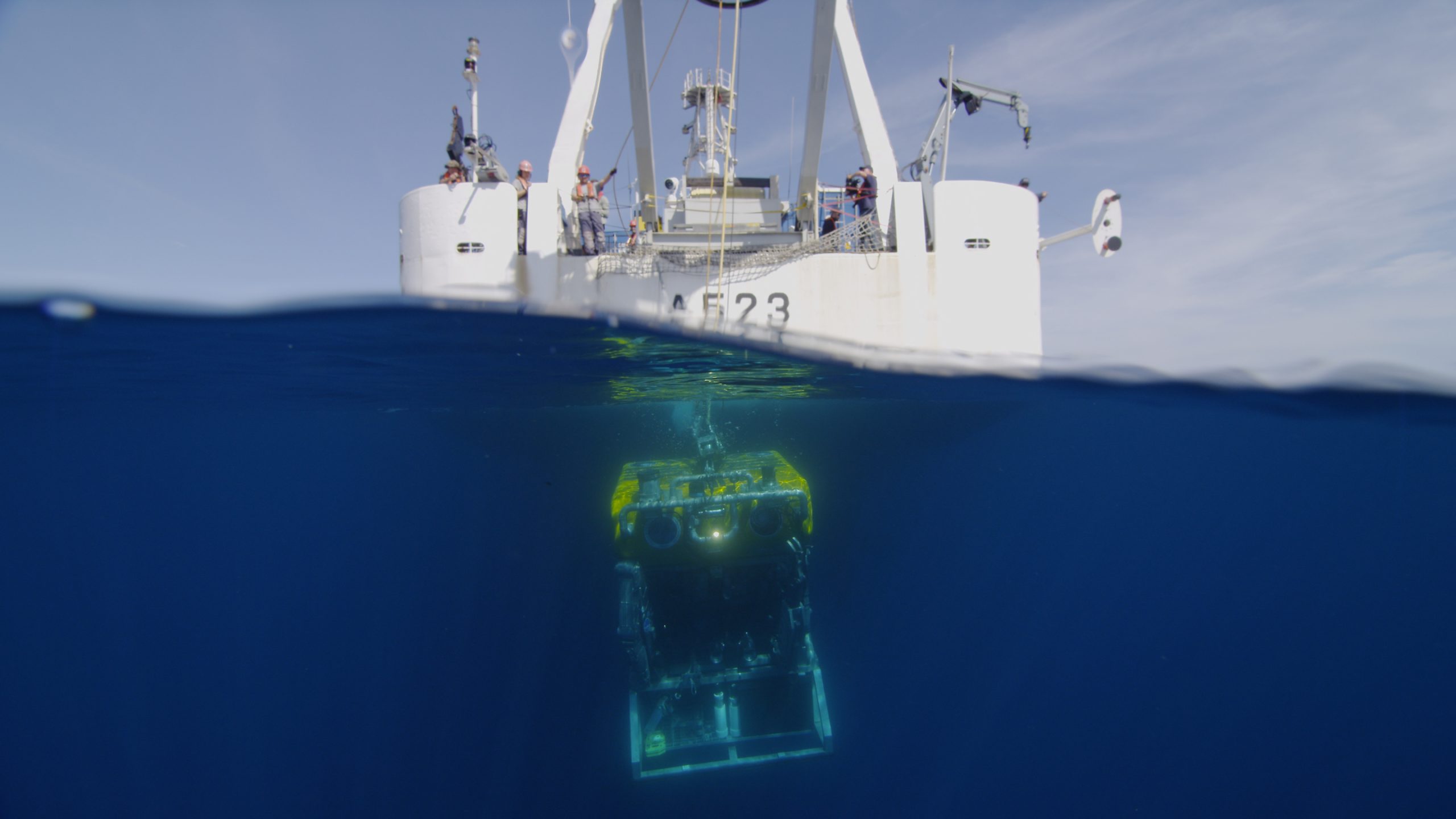
Two scientific expeditions were carried out in the Azores by Oceano Azul Foundation in collaboration with partners. These took place in 2016 and 2018, with the objectives of deepening knowledge about the archipelago’s marine ecosystems and supporting its protection.
Promoted by the Regional Government of the Azores, Oceano Azul Foundation, the Waitt Institute, and National Geographic | Pristine Seas, these missions had the scientific support of the University of the Azores, the Hydrographic Institute, the Task Group for the Extension of the Continental Shelf, and several national and international scientists.
The two expeditions confirmed the uniqueness, diversity and vitality of marine life in the Azorean Sea — but also its fragility. The data collected were crucial to supporting the revision of the Azores Marine Protected Area Network.
2016 — First expedition to the Eastern group of the Azores
In September 2016, the first scientific expedition focused on the marine ecosystems of the Eastern group of islands. In collaboration with the Waitt Institute, this expedition was notable for several scientific breakthroughs and memorable encounters with marine wildlife.
One of the most innovative moments was the non-invasive tagging method developed by Jorge Fontes — an Azorean researcher from Okeanos – Universidade dos Açores and freediver — who created necklace-style sensors for mobula rays. These devices included fusible links that would dissolve naturally, releasing the sensors at the surface, where the team could track the rays’ movements using RF directional finders.
Another highlight was the close encounter with sperm whales, which yielded valuable data for the conservation of these large cetaceans and the ecosystem they inhabit.

© Manu San Félix
2018 — A broader mission to the central and western groups
In 2018, Oceano Azul Foundation, the Waitt Institute, National Geographic | Pristine Seas and the Regional Government of the Azores launched an extensive expedition with a broader scope, involving multidisciplinary teams and advanced technologies.
The mission used remotely operated vehicles (ROVs), acoustic telemetry, high-resolution imaging systems and methods such as BRUV (baited remote underwater video), deep-sea dropcams and sample collection to study coastal, pelagic and deep-sea ecosystems.
Among the key achievements was the discovery of a hydrothermal vent field at a depth of 570 metres on the slopes of the Gigante seamount, named “Luso” — a major scientific milestone of the expedition.
The teams focused on mapping critical habitats, identifying vulnerable ecosystems, assessing biodiversity and collecting environmental data to reveal the ecological complexity of the Azorean Sea.
From science to action
The scientific reports resulting from these expeditions provided concrete recommendations on the health of Azorean marine ecosystems. This data supported the process of defining the new Azores Marine Protected Area Network, officially established in 2024 — the largest in the Atlantic.
This network represents a historic milestone in ocean conservation, ensuring that marine protection in the region is grounded in robust scientific knowledge.

© Nuno Sá
Partners
These scientific missions were only made possible through the commitment of a dedicated alliance of partners who brought together expertise, technology and knowledge to protect the Azorean Sea.
Promoters



Scientific support